FAQs
- Connecting Carers – Highland- wide Carers Centre: information, advice, Adult Carer Support Plans (ACSPs), and support to access short break funding.
- Mobilise – online support, peer communities, practical tools and information available 24/7.
- Partners in Advocacy – independent advocacy to help ensure carers' views are heard.
- Care to Connect Lochaber – community-based support and opportunities for carers to connect with others.
- Here to Help – practical support to help carers take a break from their caring role in East Sutherland.
- North Coast Connections – local support helping carers access services and community activities.
- Thriving Families – support for parent carers of children and young people under 16.
- Change Mental Health – emotional support, advice, and one-to-one support for carers.
- Know they are carers.
- Have never thought of themselves as carers.
- Have accessed support.
- Have never accessed support.
- Carers who currently receive support.
- Carers who have received support before.
- Carers who have never accessed support.
- People who are unsure whether they are carers.
- Information and advice.
- Adult Carer Support Plans.
- Wellbeing and short break opportunities.
- Peer support.
- Advocacy.
- Community-based support.
- Digital support and resources.
How will my feedback help improve support for unpaid carers in Highland?
NHS Highland receives public funding from the Scottish Government to provide support for unpaid carers. We do this by funding a range of services across Highland.
As part of good practice, we regularly review the support we fund to make sure it continues to meet carers' needs and provides the best possible outcomes. Caring roles, communities and people's needs can change over time, so it is important that we listen to carers directly.
Your feedback will help us understand what is working well, where there are gaps in support, what matters most to unpaid carers, and how support and services could be improved in the future. Your views will help inform future decisions about how unpaid carer support is planned, designed and delivered across Highland.
What support for unpaid carers is currently funded by NHS Highland?
NHS Highland Unpaid Carer Service currently funds a range of services that support unpaid carers in different ways:
What is an unpaid carer?
An unpaid carer is someone who provides help and support to a family member, friend or neighbour who could not manage without that support due to illness, disability, frailty, mental health difficulties, addiction or another long-term condition.
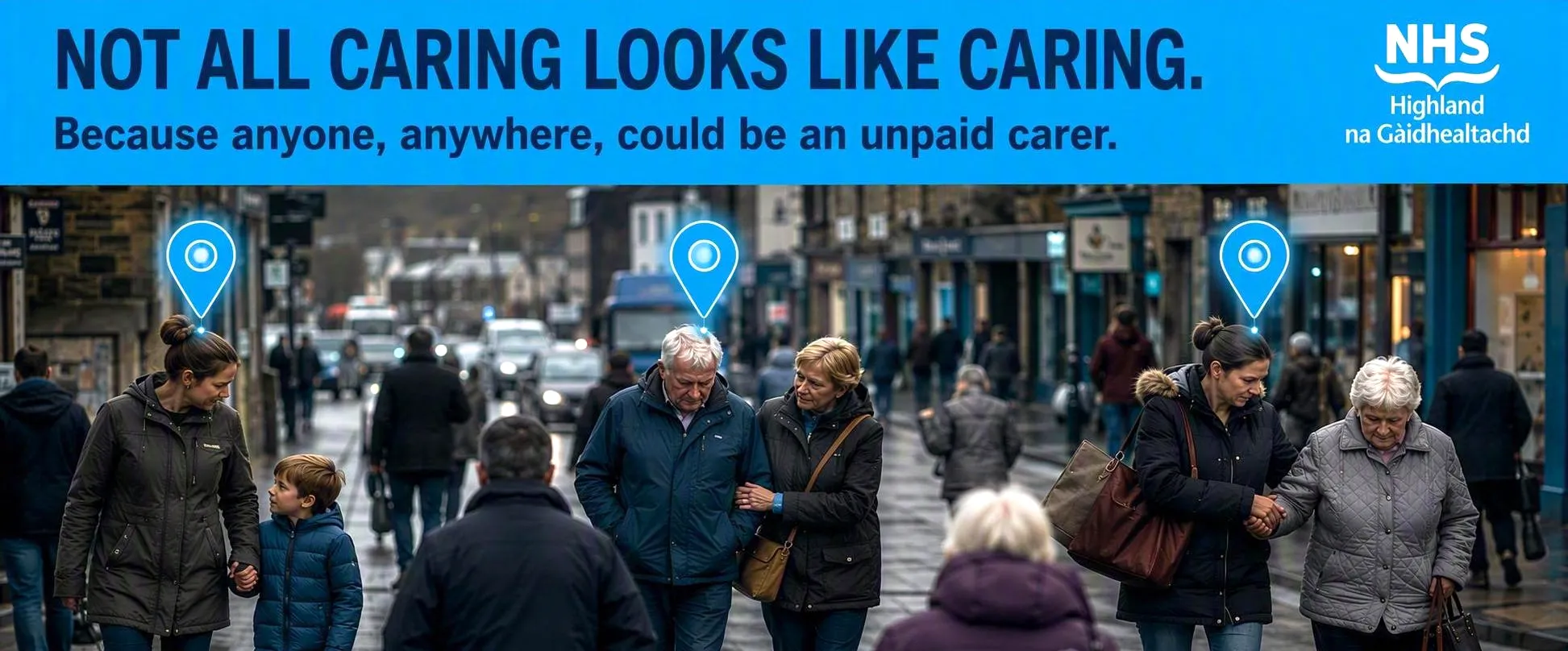
Many people do not see themselves as carers. You might simply see yourself as a husband, wife, partner, parent, son, daughter, relative or friend.
I don't think of myself as a carer. Should I still complete this?
Yes.
Many people do not think of themselves as unpaid carers. You may see yourself as a husband, wife, partner, parent, son, daughter, relative, friend or neighbour simply helping someone you care about.
However, if you regularly provide support to someone because they are ill, disabled, frail, living with a mental health condition, addiction, or need help to manage everyday life, you may be an unpaid carer.
In fact, one of the most common themes we heard from carers during the development of the Highland Carers Strategy was:
"I didn't know I was a carer."
Whether you currently receive support or not, your views are important. We want to understand the experiences of people who:
Your feedback will help us better understand how carers are identified, what support is needed, and how services can be improved across Highland.
Do I need to currently receive support to take part?
No.
We would like to hear from:
Understanding why some carers do not access support is just as important as understanding what works well for those who do.
What kind of support is available for unpaid carers?
A range of support is available across Highland, including:
This engagement aims to understand how aware carers are of these services and whether they meet their needs.
What will happen to my feedback?
Responses will be reviewed alongside other feedback from carers, partners and stakeholders.
The information will be used to identify themes, understand current challenges and opportunities, and support future planning for unpaid carer services across Highland.
Individual responses will not be publicly identified.
How can I stay involved?
If you would like to remain involved in future discussions about support for unpaid carers, there will be an opportunity to express your interest through this engagement, we encourage you to subscribe to this consultation.